
What it evaluates:
StoolOMX evaluates 25 bile acids and nine short-chain fatty acids, providing added information about microbial metabolism, bile-acid balance, motility, inflammation and microbiome function.
Best suited for patients with:
Treatment-resistant or recurrent digestive symptoms
Suspected bile-acid diarrhea
Yellow, urgent or loose stool
Constipation or altered motility
Difficulty digesting fats
Post-cholecystectomy symptoms
Suspected low butyrate or impaired microbial metabolite production
Complex cases in which knowing which organisms are present is not enough
An advanced functional add-on for patients who need information about what their microbiome is actually producing.

Type: Stand-alone urine test
What it evaluates:
Organic-acid patterns associated with cellular energy production, nutrient cofactors, oxidative stress, detoxification, neurotransmitter pathways and selected microbial metabolites.
Best suited for patients with:
Fatigue
Brain fog
Suspected B-vitamin or nutrient needs
Mitochondrial concerns
Mood or concentration symptoms
Oxidative stress
Metabolic or detoxification concerns

What it evaluates:
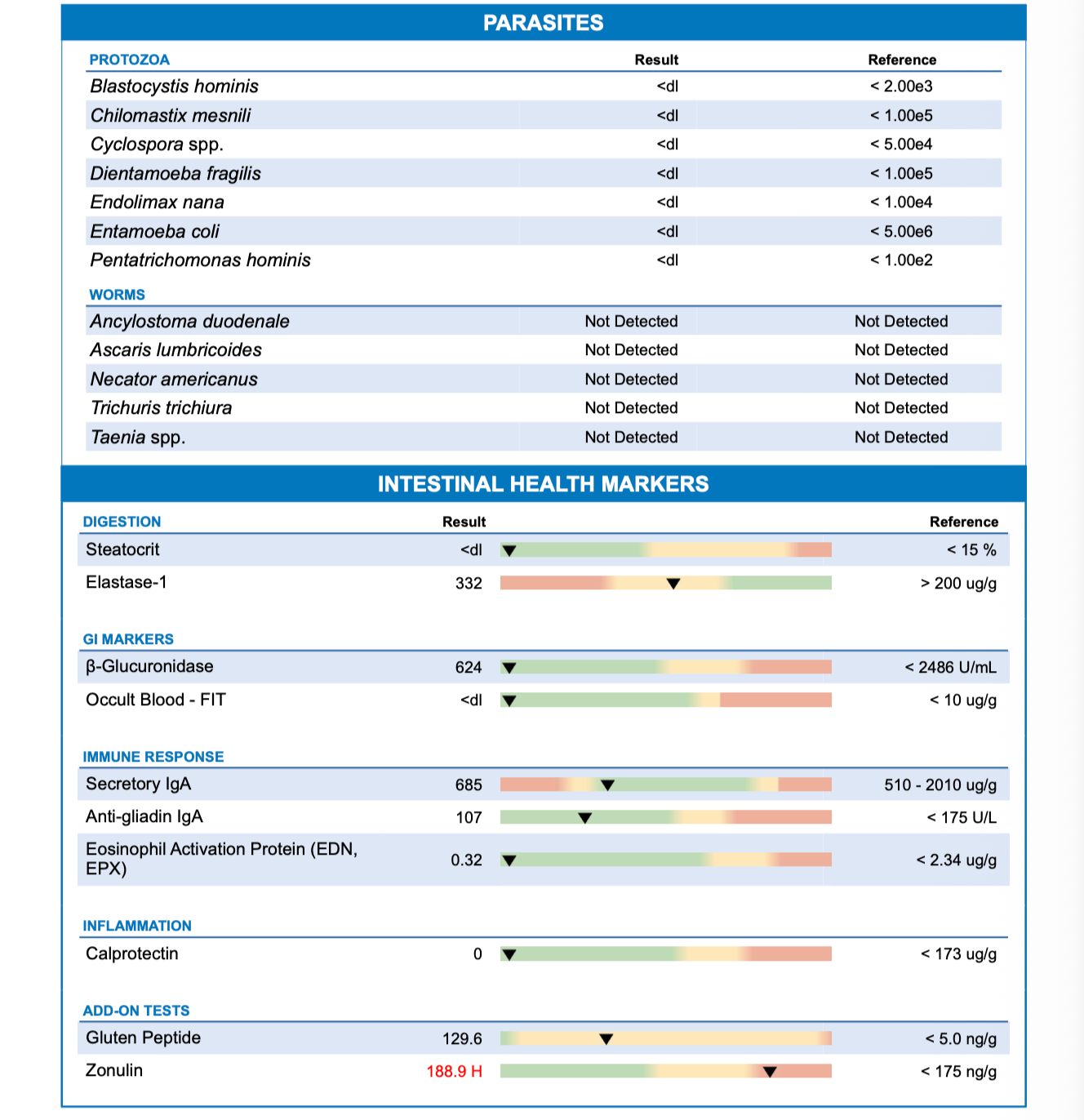
Everything included in the regular GI-MAP, plus stool zonulin as a marker associated with intestinal-barrier regulation.
Best suited for patients with:
Digestive symptoms plus suspected intestinal permeability
Food-triggered symptoms
Autoimmune or inflammatory presentations
Multiple sensitivities
Symptoms that extend beyond digestion
Important:
Zonulin should not be presented as a definitive diagnosis of “leaky gut.” It is one clinical marker that must be interpreted alongside symptoms, history and other results.
A more advanced GI-MAP option for patients with suspected barrier dysfunction.


Type : Stand-alone targeted stool profile
What it evaluates:
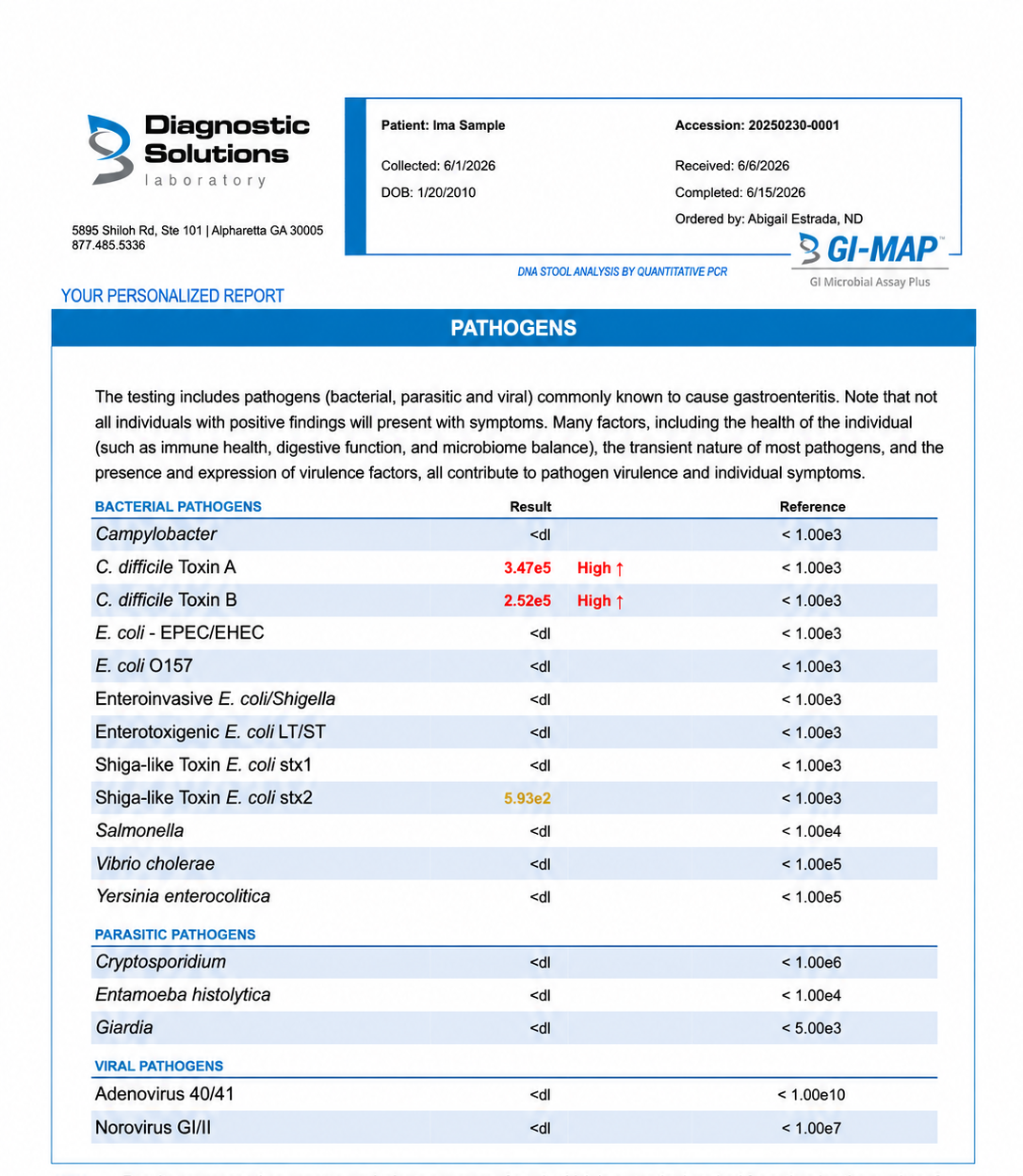
A narrower pathogen-focused assessment rather than a full microbiome and intestinal-health evaluation.
Best suited for patients with:
Acute or persistent diarrhea
Symptoms after travel, contaminated food or water
Suspected food poisoning or gastrointestinal infection
Sudden-onset nausea, cramping or loose stools
A primary concern about infectious organisms rather than chronic dysbiosis
Not ideal for:
Patients wanting a complete picture of beneficial bacteria, digestive function, gut inflammation and microbiome balance.

What it evaluates:
GI-MAP uses qPCR technology to assess gastrointestinal pathogens, H. pylori, parasites, viruses, opportunistic organisms, commensal bacteria and digestive, inflammatory and immune markers.
Best suited for patients with:
Persistent bloating, gas, diarrhea or constipation
Unexplained digestive discomfort
Suspected dysbiosis, parasites or H. pylori
Recurrent infections or weakened gut immunity
Skin concerns, brain fog or systemic symptoms suspected to involve the gut
Chronic or complex cases requiring a broad overview
No results match your search. Try removing a few filters.
